Reading or Writing...which comes first?
- Ellie
- Feb 23, 2023
- 2 min read
In Montessori philosophy, the development of reading and writing skills occur simultaneously through the use of various materials and activities. However, the approach emphasizes that reading should come before writing.
The reason for this is that reading allows the child to develop a sense of communication and understanding through the use of language. The child is exposed to various types of written language and begins to associate symbols with sounds and meanings. This process helps them to understand the structure of language and how it can be used to communicate ideas and feelings.
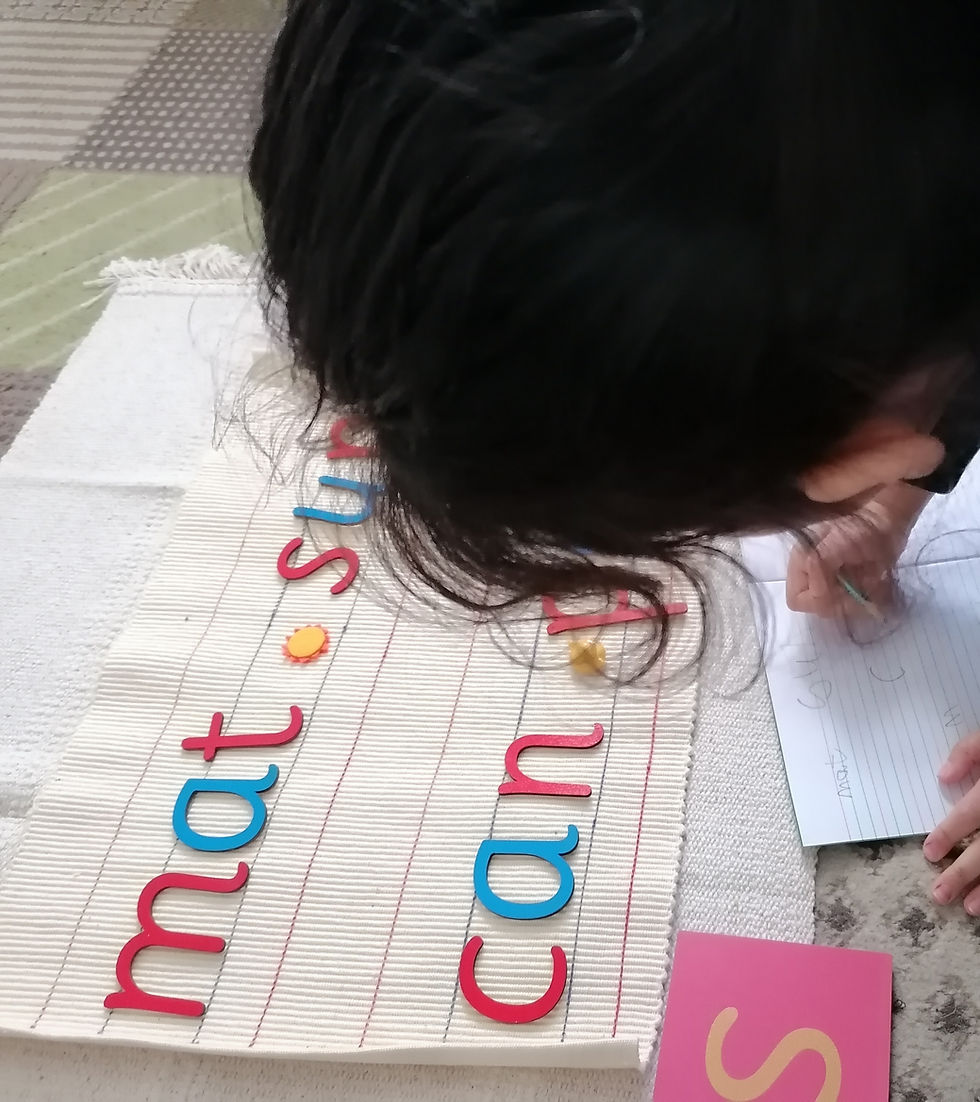
Once the child has developed the ability to read, they can then apply this knowledge to writing. The child begins to understand how words and sentences are formed and starts to use them to express their own thoughts and ideas. The focus is on the child's expression rather than on the technical aspects of writing such as spelling and grammar. The child is allowed to develop their own unique writing style without being limited by the rules of language.
In Montessori education, the role of the teacher is to facilitate learning rather than to instruct. The teacher provides the child with a variety of materials and activities to encourage exploration and discovery. The child is free to choose what they want to learn and how they want to learn it. This approach encourages independence and creativity, which are important skills for success in later life.
Montessori education also recognizes that each child develops at their own pace, and therefore the process of learning reading and writing may vary from child to child. Some children may develop reading skills before writing, while others may develop both skills simultaneously. The approach is flexible and individualized to meet the needs of each child.
Montessori philosophy emphasizes that reading should come before writing. This approach allows the child to develop a sense of communication and understanding through the use of language before moving on to expressing their own thoughts and ideas through writing. The focus is on the child's expression rather than on the technical aspects of writing, and the teacher's role is to facilitate rather than instruct. This approach encourages independence and creativity, which are important skills for success in later life.


Comments